
LinkedIn is often described as a professional social network — a place to connect with former colleagues, stay informed about industry news, and maintain a professional presence online. But LinkedIn is also a social media platform, and like all social media, it collects information about you and makes choices about what others can see.
Even if you’re retired or semi-retired, you may still use LinkedIn to stay connected with old friends or professional contacts. Understanding the platform’s privacy settings helps you stay in control of your personal information, limit unwanted contact, and feel safer using it.
What Is LinkedIn and Who Uses It?
LinkedIn has over 1 billion members worldwide, making it the largest professional networking platform in the world. While it’s known for job seekers and recruiters, many seniors use LinkedIn simply to stay connected with people from their working years — former colleagues, business partners, or community members.
LinkedIn profiles can include a great deal of personal information: your full name, location, work history, education, photo, and sometimes your email address or phone number. Understanding what’s public and what’s private is the first step toward protecting yourself.
- Public profile: Visible to anyone on the internet, even people without a LinkedIn account.
- Network visibility: Visible only to your LinkedIn connections.
- Private: Visible only to you.
Why LinkedIn Privacy Matters for Seniors
LinkedIn is a popular target for scammers because profiles contain real, verified-looking information. Fake recruiters, romance scammers, and phishing attempts are all common on the platform. Sharing too much publicly — like your location, phone number, or daily schedule — can make you a target.
Additionally, LinkedIn’s default settings are often set to share more than you might expect. The platform regularly introduces new features that reset or expand sharing defaults. Periodic checkups are essential.
Essential LinkedIn Privacy Settings to Review Today
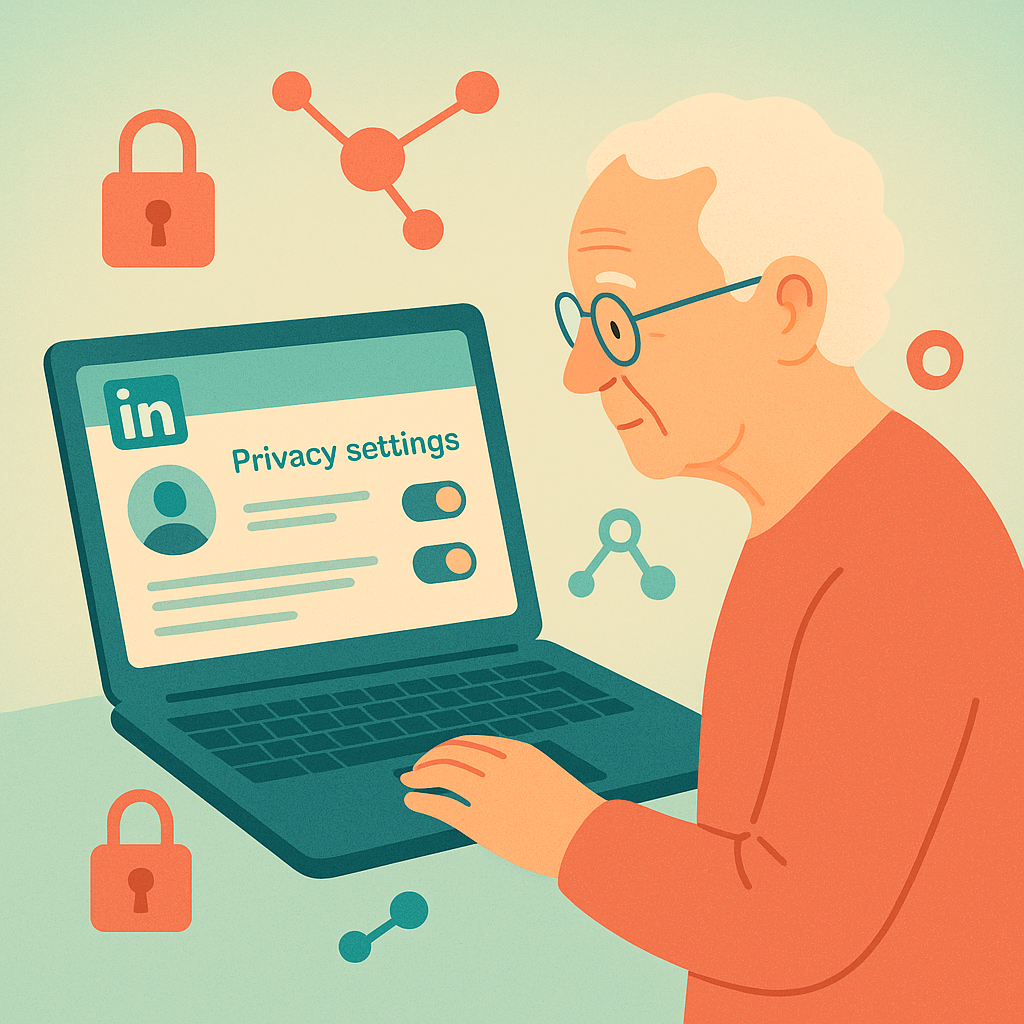
These are the most important settings to check, with simple explanations of what each one controls.
1. Adjust Your Public Profile Visibility
Go to your profile, then click Edit public profile & URL (on desktop, this appears on the right side of your profile page). Here you can control exactly what’s visible to people who aren’t logged in — and by extension, what appears in Google search results. You can turn off specific sections like your contact info, your summary, or your activity.
2. Control Who Can See Your Connections
By default, LinkedIn shows your connections list to your connections. To make it private, go to Settings & Privacy → Visibility → Visibility of your connections, and set it to Only you. This prevents others from browsing your professional network, which can deter social engineering attacks.
3. Turn Off Profile Viewing Notifications
LinkedIn notifies users when someone views their profile. While this can be useful, it also means that when you view someone else’s profile, they’re notified. To browse privately, go to Settings & Privacy → Visibility → Profile viewing options and switch to Private mode. Note that in private mode, you also lose the ability to see who viewed your profile.
How to Limit What LinkedIn Shares About You
LinkedIn uses your activity to power its recommendation engine and advertising system. Here are a few more settings worth adjusting to reduce the data the platform collects and shares.
To access all privacy settings: click your profile photo in the top right, then select Settings & Privacy. From there, explore the Data Privacy section.
- Manage your data: You can download a copy of all data LinkedIn has about you, or request deletion of certain data types.
- Ad preferences: Under Advertising data, you can opt out of interest-based advertising and limit how LinkedIn shares your data with advertising partners.
- Sync contacts: If you’ve allowed LinkedIn to sync your phone contacts, you can revoke this access under Data Privacy → Syncing options.
Pros and Cons of Tightening Your LinkedIn Privacy
Reduced exposure to scammers
Less public information means fewer opportunities for bad actors to craft convincing impersonation or phishing messages.
Better control over your digital footprint
Limiting your public profile means less of your personal history appears in general web searches.
Fewer unwanted connection requests
Adjusting who can find and contact you reduces unsolicited messages from strangers and fake accounts.
Lower profile visibility
A more private profile is harder for legitimate contacts — like old colleagues — to find you organically.
Fewer recommendations
Reducing data sharing may result in less personalized job or content suggestions, which some users find helpful.
Frequently Asked Questions
Should I delete my LinkedIn account if I’m not actively using it?
If you no longer use LinkedIn and don’t plan to, deleting it is a valid privacy choice. An inactive account still holds your personal information and could be compromised. To delete it, go to Settings & Privacy → Account management → Close account.
Can strangers message me on LinkedIn?
Yes, unless you restrict it. Go to Settings & Privacy → Communications → Who can send you invitations and set it to Only people who know your email address or import from email. This significantly reduces cold outreach from strangers.
How do I know if a LinkedIn profile or message is a scam?
Red flags include: profiles with few connections or no history, messages that quickly become personal or romantic, offers that seem too good to be true, and requests for money or sensitive information. When in doubt, do not respond and report the profile to LinkedIn.
Is it safe to list my phone number on LinkedIn?
No. Your phone number is not necessary for LinkedIn and adds unnecessary risk. Remove it from your profile and account settings. Use your email address for account recovery instead.
Final Thoughts
LinkedIn can be a valuable tool for staying professionally connected even in retirement — but it works best when you’re in control of what others can see. Taking 15 to 20 minutes to review your privacy settings on the platform is one of the most effective things you can do to protect your personal information online.
Remember: you don’t have to share everything to maintain a presence. A private, carefully curated profile is both safer and more professional than an open one. Start with the settings in this guide and revisit them every few months, since platforms often change their defaults with updates.