
Every day, millions of fake websites are created to steal personal information from unsuspecting visitors. If you’ve ever wondered whether a website is legitimate before entering your credit card details or personal information, you’re asking the right question.
Learning to identify legitimate websites is one of the most important digital safety skills you can develop. This guide will walk you through simple, practical methods to verify website authenticity before you share sensitive information.
In this article, you’ll learn:
- How to spot visual clues that indicate a website is trustworthy
- Simple tools to check website legitimacy instantly
- Red flags that should make you leave a site immediately
Read on to learn how to protect yourself from fraudulent websites with confidence.
What Makes a Website Legitimate
A legitimate website is one that belongs to the actual business or organization it claims to represent. Think of it like a real store—you can tell a legitimate store from a fake one by looking for proper signage, professional appearance, and official business licenses.
Online, legitimate websites share these characteristics:
- Secure connection: Uses HTTPS encryption (the padlock icon in your browser)
- Professional design: Clean layout without excessive pop-ups or typos
- Complete contact information: Physical address, phone number, and email
- Privacy policy: Clear explanation of how your data is handled
- Verified payment methods: Recognized payment processors like PayPal or major credit cards
Why Checking Website Legitimacy Matters for You
According to the FBI’s Internet Crime Complaint Center, Americans over 60 lost more than $1.6 billion to online fraud in 2022. Fake websites are one of the primary tools scammers use to steal personal and financial information.
The consequences of visiting a fraudulent website can include:
- Identity theft: Criminals use your personal information to open accounts
- Financial loss: Direct theft from bank accounts or unauthorized charges
- Computer infection: Malware that can damage your device or steal more data
Simple Methods to Verify Website Authenticity
You don’t need technical expertise to check if a website is legitimate. Here are proven methods that anyone can use:
Check the Web Address (URL) Carefully
The website address in your browser’s address bar reveals important clues. Legitimate businesses use their official domain names consistently.
Look for these positive signs:
- The URL matches the company’s known web address
- It starts with “https://” not just “http://”
- No random numbers or extra characters added to familiar brand names
Red flags in URLs:
- Misspellings like “amazom.com” instead of “amazon.com”
- Extra words like “amazon-security-update.com”
- Unfamiliar domains ending in unusual extensions
Look for the Security Lock Icon
Every legitimate website handling personal or financial information uses HTTPS encryption. This appears as a padlock icon next to the web address in your browser.
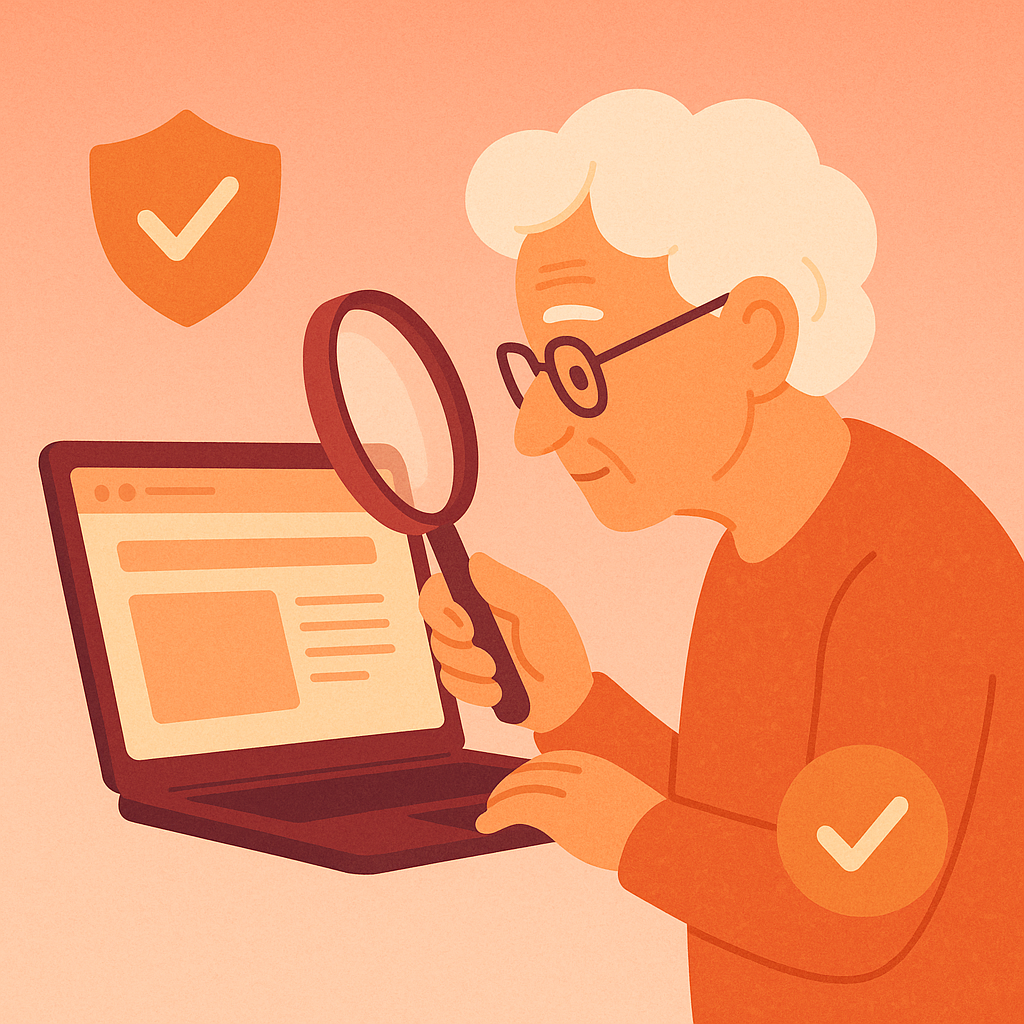
Verify Contact Information
Legitimate businesses provide multiple ways to contact them. Look for complete contact details including physical address, phone number, and customer service email. If a website only has a contact form with no other information, proceed with caution.
Check Reviews and Business Listings
Search for the company name along with “reviews” or “complaints” in Google. Check the Better Business Bureau website (bbb.org) to see if the business is registered and what their rating is.
Practical Tips for Daily Website Safety
- Never click links in suspicious emails: Instead, type the website address directly into your browser
- Start with the company’s official website: Use Google to find the legitimate site, then navigate from there
- Trust your instincts: If something feels off about a website, leave immediately
- Use familiar payment methods: Stick to credit cards or PayPal rather than debit cards or wire transfers
- Keep your browser updated: Modern browsers warn you about known dangerous websites
- Shop on well-known sites: Stick to established retailers you recognize
Pros and Cons of Different Verification Methods
Visual inspection is fast
Checking URLs and security icons takes seconds and requires no special tools.
Browser warnings are reliable
Modern browsers automatically block most known malicious websites.
Multiple verification layers
Using several methods together provides strong protection against fraud.
New scam sites bypass filters
Recently created fraudulent websites may not yet be identified by security systems.
Visual clues can be faked
Sophisticated scammers create websites that look completely legitimate.
Frequently Asked Questions
Is it safe to enter my email address to check if a website is legitimate?
Only if you’re using a legitimate verification service. Never enter personal information on a suspicious website to “verify” it. Use external tools like the Better Business Bureau or Google searches instead.
What should I do if I already entered information on a fake website?
Immediately change any passwords you used, contact your bank if you entered financial information, and monitor your accounts closely. Consider placing a fraud alert on your credit reports.
Can I trust websites that don’t require personal information?
Generally yes, but be cautious about downloading files or clicking links. Even if you don’t share personal data, malicious websites can still install harmful software on your computer.
Are all websites with security certificates legitimate?
No. While the padlock icon shows the connection is encrypted, it doesn’t guarantee the website owner is legitimate. Scammers can obtain security certificates for fake websites too.
Final Thoughts
Verifying website legitimacy becomes second nature with practice. The few seconds you spend checking a website’s authenticity can save you from significant financial and personal harm. Remember: when in doubt, don’t enter any personal information and seek help from someone you trust.
You don’t need to be a tech expert to stay safe online. Trust your instincts, use the simple verification methods in this guide, and don’t hesitate to walk away from any website that raises concerns.