

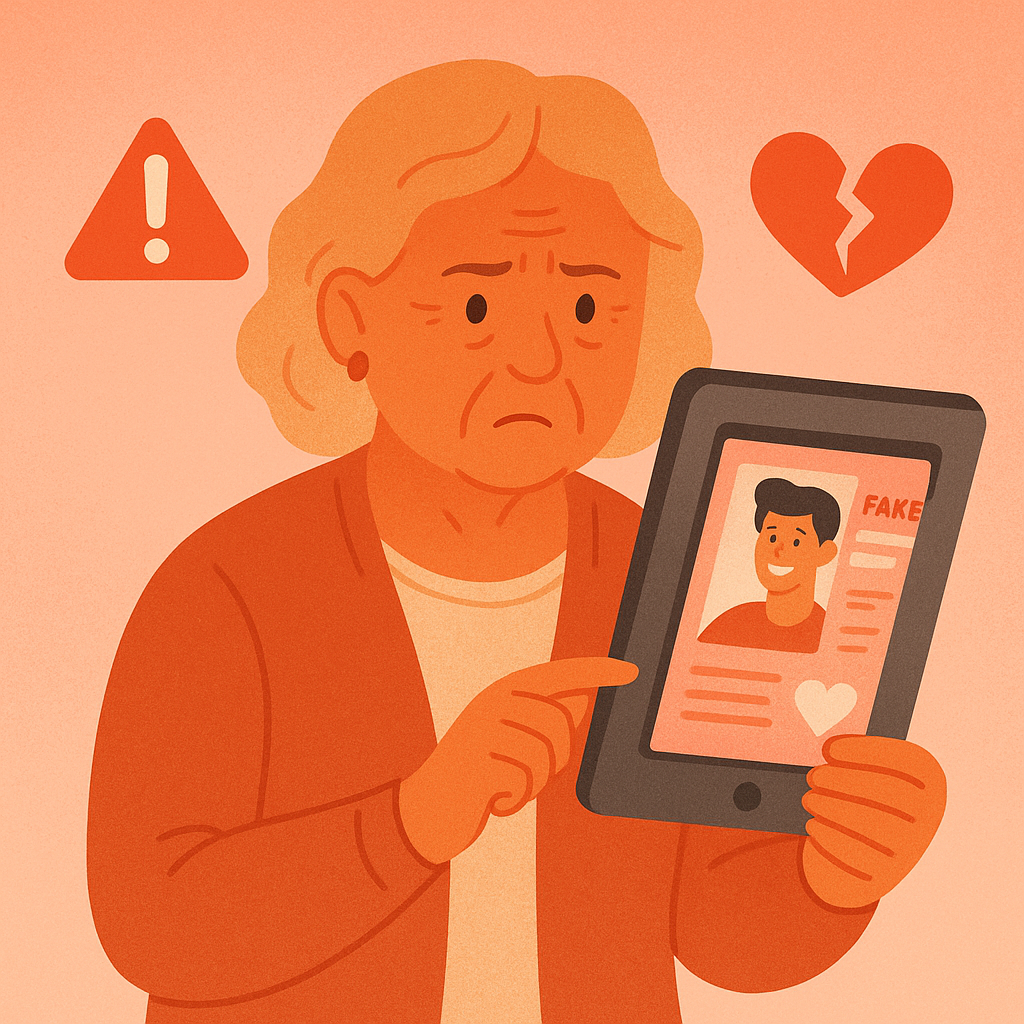
Online romance scams have become one of the most financially devastating forms of fraud targeting older adults. These scammers create fake profiles on dating sites and social media, building emotional relationships over weeks or months before requesting money for supposed emergencies.
If you’re using online dating platforms or have been contacted by someone expressing romantic interest online, understanding these warning signs could save you thousands of dollars and emotional heartbreak.
This comprehensive guide will help you:
- Recognize the common tactics romance scammers use to build trust
- Spot red flags that indicate someone is not who they claim to be
- Protect yourself while still enjoying legitimate online connections
Let’s explore how to stay safe while keeping your heart open to genuine relationships.
What Are Romance Scams
Romance scams, also called catfishing, occur when criminals create fake online personas to develop relationships with victims for financial gain. Think of it like someone wearing a disguise and pretending to be your friend to eventually ask for money.
These scams typically follow a predictable pattern:
- Profile creation: Scammers steal photos and create compelling fake identities
- Initial contact: They reach out on dating sites, social media, or email
- Relationship building: Weeks of daily communication to establish trust and emotional connection
- The ask: Request for money due to a supposed emergency or travel need
- Escalation: Increasingly desperate requests for larger amounts
Why Romance Scams Are Particularly Dangerous
According to the Federal Trade Commission, Americans reported losing $547 million to romance scams in 2021, with the median individual loss being $2,400. Adults over 60 represented 28% of all reports but accounted for 44% of the total dollar losses.
The emotional impact often exceeds the financial damage:
- Deep betrayal: Victims feel violated after investing genuine emotions
- Shame and isolation: Many are too embarrassed to report or seek help
- Trust issues: Difficulty forming new relationships, even legitimate ones
Red Flags That Scream Romance Scam
Professional scammers use sophisticated psychological tactics, but they leave telltale signs if you know what to look for:
Profile and Photo Red Flags
Scammers often steal photos from real people’s social media accounts or use stock photography. Their profiles may seem too good to be true or lack personal details that real people naturally share.
- Professional modeling photos: Pictures that look like they came from a magazine
- Limited photos: Only 1-3 pictures, often in different settings that don’t match
- Vague profile information: Minimal personal details or generic interests
- Recent account creation: Profile was created very recently
Communication Patterns
Scammers follow scripts and timelines designed to build trust quickly while avoiding situations that might expose their deception.
- Immediate strong feelings: Professes love unusually quickly
- Avoids phone calls: Always has excuses for not talking on the phone
- Won’t video chat: Camera is “broken” or they’re in a location without internet
- Perfect English one day, poor the next: Inconsistent language skills
- Available at odd hours: Online at times that don’t match their claimed location
Backstory Warning Signs
Scammers often claim to be in situations that justify their inability to meet in person and create sympathy that makes money requests seem reasonable.
- Overseas military deployment: Claims to be deployed and needs money for leave
- International business travel: Stuck abroad with financial problems
- Recent widow/widower: Tragic backstory designed to gain sympathy
- Has a child with serious illness: Creates urgency for medical expenses
Practical Tips to Protect Yourself
- Never send money, gifts, or personal information: No matter how convincing the story sounds
- Reverse image search their photos: Right-click photos and “Search Google for image”
- Ask specific questions about their location: Local weather, news, or landmarks
- Insist on video calls early: Real people will be happy to see you face-to-face
- Talk to friends or family: Share details about your online relationships
- Trust your instincts: If something feels off, investigate further before proceeding
- Take relationships slowly: Genuine connections develop naturally over time
Pros and Cons of Online Dating Safety Measures
Early detection prevents financial loss
Recognizing red flags early can save thousands of dollars and emotional trauma.
Verification tools are free
Image searches and basic background checks cost nothing and provide valuable insights.
Builds confidence in legitimate connections
When someone passes your verification tests, you can feel more secure investing emotionally.
May slow legitimate relationships
Some genuine people might feel uncomfortable with extensive verification requests.
Sophisticated scammers adapt
Professional scammers study common detection methods and develop countermeasures.
Frequently Asked Questions
What should I do if I think I’m talking to a scammer?
Stop all communication immediately, don’t send any money, and report the profile to the platform where you met them. If you’ve already sent money, contact your bank and file a report with the FTC at ReportFraud.ftc.gov.
Is it safe to give out my phone number to someone I met online?
Wait until you’ve had multiple video conversations and feel confident about their identity. Even then, consider using a Google Voice number initially rather than your primary phone number.
How can I tell if photos on a dating profile are real?
Use Google’s reverse image search: right-click on the photo and select “Search Google for image.” If the photos appear on multiple profiles or stock photo sites, it’s likely a scam.
Can romance scammers target people who aren’t on dating sites?
Yes, they also reach out through Facebook, LinkedIn, Instagram, and even email. They may claim you were “recommended” by a mutual friend or that they found your profile attractive.
Final Thoughts
Finding love and companionship online is absolutely possible and thousands of people form genuine relationships through dating platforms every day. The key is maintaining healthy skepticism while keeping your heart open to authentic connections.
Remember: anyone who truly cares about you will understand your need to verify their identity and will be happy to prove they are who they claim to be. Don’t let scammers steal your money or your ability to trust others.