
Your email inbox is like your home’s mailbox — but instead of just letters, it can receive dangerous packages that threaten your personal information and financial security. Every day, billions of malicious emails are sent to unsuspecting users, and seniors are often the primary targets.
The good news? With a few simple precautions, you can turn your inbox into a fortress against hackers and spammers. In this comprehensive guide, you’ll discover:
- How to recognize and block suspicious emails before they cause damage
- Essential settings to strengthen your email account security
- Warning signs that indicate your email might be compromised
- Simple daily habits that keep cybercriminals away from your inbox
Let’s walk through the essential steps to make your email as secure as your front door.
What Makes Email Dangerous?
Email threats have evolved far beyond simple spam. Today’s cybercriminals use sophisticated tactics to steal personal information, install malware, and drain bank accounts. Think of these threats like skilled con artists — they know exactly what to say to gain your trust.
Modern email dangers include:
- Phishing emails: Fake messages that look like they’re from banks, stores, or government agencies
- Malware attachments: Files that install viruses or spyware on your device
- Identity theft scams: Emails asking for Social Security numbers, passwords, or financial information
- Business email compromise: Criminals impersonating family members or employers asking for money transfers
Why Email Security Matters More Than Ever
According to the FBI’s 2024 Internet Crime Complaint Center report, email-based fraud targeting adults over 50 resulted in losses exceeding $3.4 billion. The average victim lost $9,100, making email security one of the most critical aspects of digital safety.
The consequences of compromised email extend far beyond financial loss:
- Identity theft: Criminals use your personal information to open credit accounts
- Account takeovers: Hackers gain access to your banking, shopping, and social media accounts
- Family targeting: Scammers contact your relatives pretending to be you in emergency situations
- Privacy invasion: Personal conversations and photos become accessible to strangers
Essential Email Security Settings
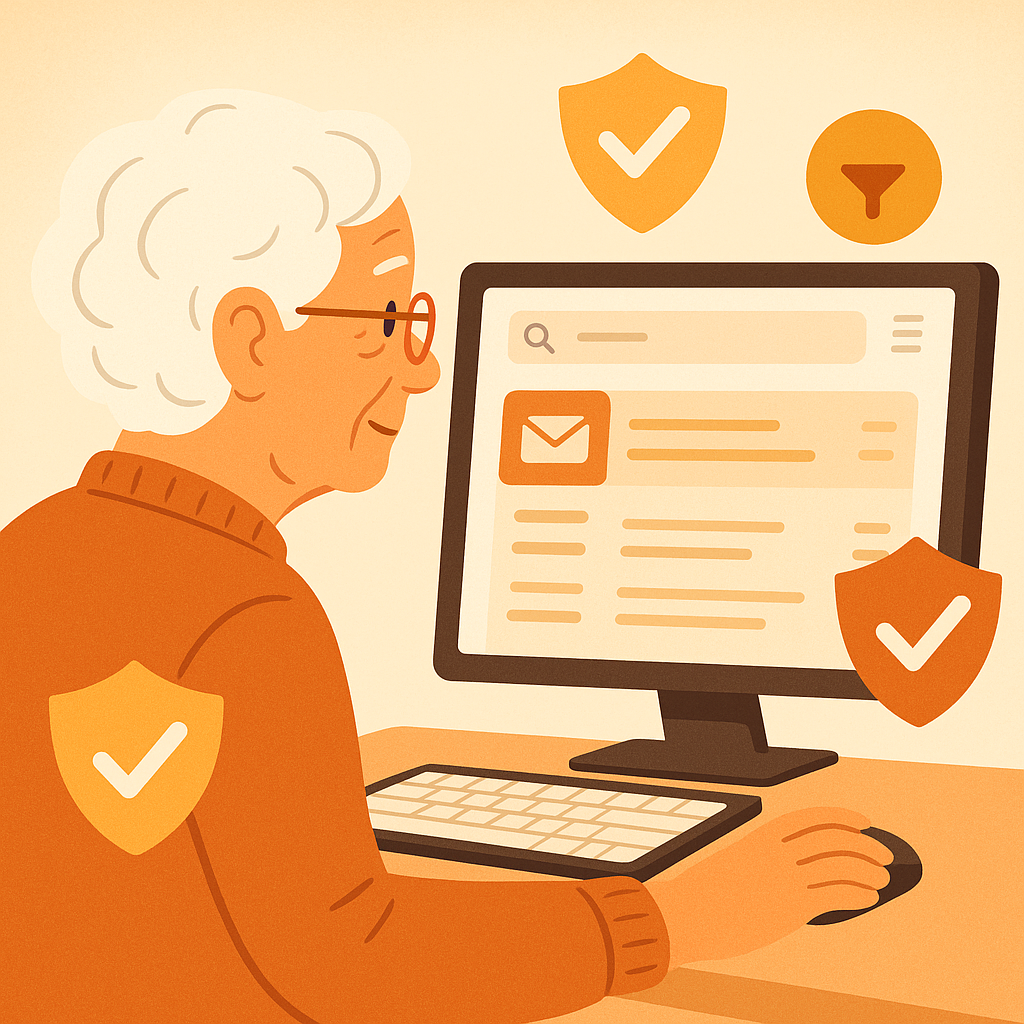
Before you can recognize threats, you need to configure your email account for maximum security. These one-time setup steps create multiple layers of protection around your inbox.
Enable Two-Factor Authentication
Two-factor authentication (2FA) is like having a security guard at your email’s front door. Even if someone steals your password, they can’t access your account without the second verification step.
- Gmail: Google Account settings → Security → 2-Step Verification
- Outlook: Microsoft Account → Security → More security options → Turn on two-step verification
- Apple Mail: Apple ID → Sign-In and Security → Two-Factor Authentication
- Yahoo Mail: Account Info → Account Security → Two-step verification
Update Your Recovery Information
Ensure your account recovery options are current and secure. Outdated recovery information can lock you out of your own account or provide backdoor access to hackers.
- Recovery email: Use a separate, secure email address
- Phone number: Keep it updated with your current number
- Security questions: Choose answers that only you would know
- App passwords: Revoke access for any apps you no longer use
Configure Spam and Filter Settings
Modern email providers offer sophisticated filtering, but you may need to adjust settings for optimal protection.
Recommended filter settings:
- Spam sensitivity: Set to “High” or “Aggressive”
- External email warnings: Enable notifications for emails from outside your organization
- Link protection: Turn on URL scanning and safe browsing warnings
- Attachment scanning: Enable automatic malware scanning for all attachments
Daily Email Safety Habits
Security isn’t just about settings — it’s about developing smart daily practices that become second nature.
Before Opening Any Email
- Check the sender’s address carefully: Look for misspellings or suspicious domains
- Verify urgent requests: Call the sender directly if they’re asking for money or personal information
- Examine the subject line: Be wary of all-caps text, excessive exclamation points, or pressure tactics
- Look for personalization: Legitimate companies usually address you by name, not “Dear Customer”
When Reading Email Content
- Hover over links without clicking: Check if the displayed URL matches the actual destination
- Question unexpected attachments: Don’t open files you weren’t expecting to receive
- Watch for grammar mistakes: Professional organizations proofread their communications
- Be skeptical of urgency: Scammers often create false deadlines to pressure quick decisions
Practical Tips for Advanced Protection
Once you’ve mastered the basics, these advanced practices provide additional security layers:
- Use a separate email for shopping: Create a dedicated email address for online purchases and newsletters
- Regularly review account activity: Check login history monthly for suspicious access attempts
- Update your email client: Install security patches as soon as they become available
- Backup important emails: Export critical emails to local storage regularly
- Monitor your digital footprint: Remove your email from public directories and data broker sites
- Use secure networks: Avoid checking email on public Wi-Fi networks
Pros and Cons of Different Email Providers
Advanced spam filtering
Machine learning algorithms catch 99.9% of spam and phishing attempts.
Regular security updates
Continuous improvements to protect against new threats.
Two-factor authentication
Multiple verification methods available for account protection.
Limited security features
May lack advanced spam filtering and threat detection capabilities.
Slower security updates
Smaller teams may take longer to respond to new threats.
Less customer support
Limited help available if your account is compromised.
Frequently Asked Questions
How can I tell if my email account has been hacked?
Warning signs include: emails you didn’t send in your sent folder, password not working, friends receiving spam from your address, unfamiliar emails in your inbox, or unexpected password reset notifications. If you notice any of these, change your password immediately and enable two-factor authentication.
Should I reply to spam emails to ask them to stop sending me messages?
Never reply to spam emails or click “unsubscribe” links from unknown senders. This confirms your email address is active and often results in more spam. Instead, mark the email as spam and block the sender. Legitimate companies honor unsubscribe requests, but scammers use them to verify active email addresses.
Is it safe to check email on my smartphone?
Yes, smartphone email apps are generally secure if you keep them updated and use strong security settings. Enable automatic app updates, use a screen lock, and avoid checking email on public Wi-Fi. Smartphone email apps often have additional security features like remote wipe if your device is stolen.
What should I do if I accidentally clicked a suspicious email link?
Don’t panic, but act quickly. Close the browser window immediately, run a virus scan on your device, change passwords for any accounts you accessed recently, monitor your financial accounts for unauthorized activity, and consider enabling fraud alerts with your bank and credit card companies.
Final Thoughts
Email security doesn’t require technical expertise — it requires consistent, careful habits. By configuring strong security settings, staying alert to suspicious emails, and following safe browsing practices, you can protect your inbox from virtually all common threats.
Remember, cybercriminals rely on people making quick decisions without thinking. When an email asks you to act urgently, that’s exactly when you should slow down and verify the request. Your email contains access to your most important accounts, so it deserves the same protection you’d give to your house keys.