
Bank impersonation scams warning signs often appear when a message makes you feel worried about your money. A text may say there was a suspicious charge. A caller may claim your account is frozen. An email may tell you to click a link before your card stops working.
The safest first step is not to prove you are smart or fast. It is to slow the situation down. Real banks may contact customers about possible fraud, but they should not pressure you to reveal private codes, move money, buy gift cards, or use a phone number from a surprising message.
Why Bank Impersonation Scams Warning Signs Matter
Bank scams feel especially convincing because they borrow the name of an institution you already trust. The message may use official-sounding words like fraud department, security alert, suspicious activity, or account verification. Those words are meant to make you react before you think.
The FDIC explains that bank impersonation scams can arrive by text, email, or phone, and may ask for personal information such as Social Security numbers, card numbers, bank account passwords, or one-time codes. You can review the FDIC’s official guidance on bank impersonation scams and fake banks before responding to a suspicious message.
Start With Avoiding Online Scams
Many bank impersonation scams use the same pattern as other online scams: surprise, urgency, secrecy, and a request that benefits the scammer. The story changes, but the pressure remains the clue.
If a message claims there is a Medicare, delivery, charity, or account problem, compare the tone to our guide on recognizing fake Medicare emails, calls, and websites. Scammers often copy the style of trusted organizations to make the request feel normal.
Bank scams can also start as a different kind of scam. Someone pretending to be tech support, a store, or a government office may eventually claim they need to transfer you to your bank for help. That is why our guide to tech support scam warning signs is useful background for this topic too.
What Real Banks Will Not Ask For
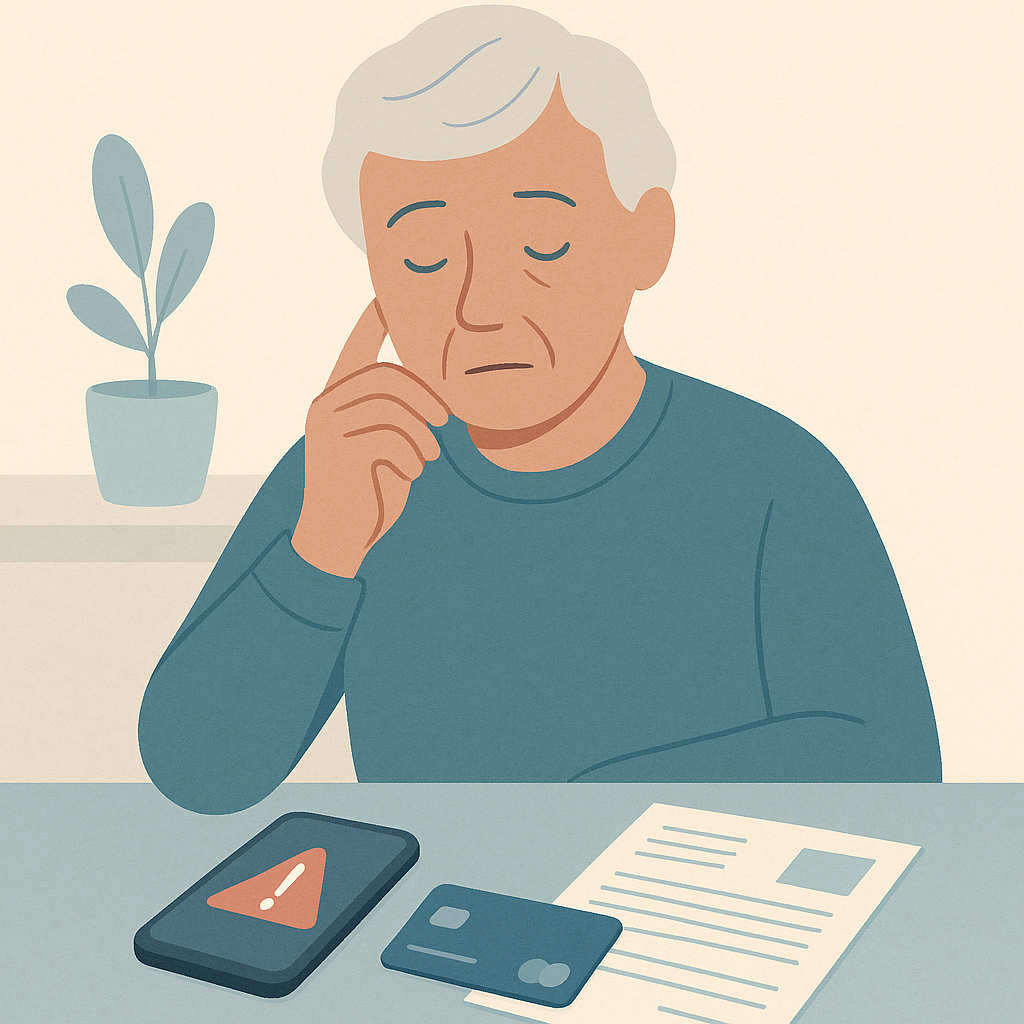
A real bank may ask you to confirm your identity when you call them through an official number. That is different from a surprise caller, text, or email demanding private information from you first.
Private codes and passwords
A real bank should not ask you to read a one-time login code, password, PIN, or full online banking password to a caller. Those codes are meant to prove that you are signing in, not to help a stranger sign in as you.
Urgent transfers or payment tricks
A real bank should not tell you to move money to a safe account, send a wire under pressure, buy gift cards, pay with cryptocurrency, or keep the call secret from family. Those are serious bank impersonation scams warning signs.
How to Handle a Bank Impersonation Message Step by Step
If you receive a message that claims to be from your bank, use this steady process. You do not need to solve everything while the person is still talking.
- Stop the conversation: Do not click a link, press a texted phone number, or continue a call that feels urgent.
- Do not share private details: Keep passwords, PINs, one-time codes, Social Security numbers, and full card numbers private.
- Find the real contact path: Use the phone number on your debit card, credit card, bank statement, or the bank’s official website that you type in yourself.
- Ask a simple question: Say, “I received a message about my account. Can you check whether there is a real alert?”
- Review recent activity: Look for charges, transfers, new payees, changed contact details, or alerts you do not recognize.
- Change passwords only from a trusted place: If the bank confirms risk, update your password by going directly to the official site or app.
- Save the evidence: Keep the suspicious text, email, phone number, voicemail, or screenshot in case the bank or FTC asks for details.
If a message includes a link, do not use it as your shortcut. Our guide to checking an email link before clicking explains how links can look familiar while still leading somewhere unsafe.
Common Avoiding Online Scams Mistakes to Avoid
These mistakes are common because scammers build the situation to feel urgent. The goal is to notice the pattern, not to feel embarrassed.
- Trusting caller ID: A phone screen can show a familiar name or local number even when the call is not truly from your bank.
- Replying yes or no too quickly: Some scam texts start with a fake fraud alert and then trigger a follow-up call.
- Calling the number in the message: A scammer can put their own phone number in a text or email. Use a number you already trust.
- Sharing one-time codes: A code sent to your phone may let the scammer enter your account.
- Moving money to protect it: If someone says your money must be moved immediately to a safe account, stop and call your bank directly.
- Keeping it secret: Real fraud help does not require you to hide the situation from a spouse, adult child, banker, or trusted friend.
A Simple Checklist
Use this checklist before responding to any bank-related message, especially one that arrives by text or surprise phone call.
- Contact method: Did the bank contact you unexpectedly?
- Urgency: Are you being told to act within minutes?
- Private information: Are they asking for a password, PIN, full card number, Social Security number, or one-time code?
- Payment request: Are they asking for a wire transfer, gift card, cryptocurrency, or cash app payment?
- Secrecy: Are they telling you not to speak with anyone else?
- Verification: Have you contacted the bank using a number from your card, statement, or official website?
If the scammer asks for gift cards instead of bank information, read our guide to gift card scams warning signs. That payment request is a separate warning sign that the story is not legitimate.
Pros and Cons of Verifying Bank Messages Directly
Reduces pressure
Calling the bank directly turns a rushed situation into a normal customer service conversation.
Protects private codes
You avoid giving passwords, PINs, or one-time codes to someone who contacted you unexpectedly.
Creates a clear record
Your real bank can note the suspicious contact and guide you through the correct next step.
Takes a few extra minutes
Finding the official number may feel slower than replying, but that pause is what protects you.
Menus can be frustrating
Bank phone systems are not always simple, so patience may be needed.
False alarms can happen
Sometimes a real alert is just a mistake or routine check, but verifying safely is still worth it.
When to Get Extra Help
Get help right away if you shared a password, PIN, one-time code, Social Security number, full card number, or moved money because of a suspicious message. Call the bank directly and explain exactly what happened. Ask whether your card, online banking password, transfers, alerts, or contact information need immediate review.
You can also report impersonation scams through the FTC. The FTC’s Consumer Advice page on impersonation scams explains how scammers pretend to be trusted organizations and why unexpected requests for sensitive details deserve caution.
Frequently Asked Questions
What should I check first if my bank texts me?
Do not use the link or phone number in the text. Call the number on your card, statement, or official bank website and ask whether there is a real alert.
Can a real bank ever call about fraud?
Yes, a bank may contact you about suspicious activity. The safer rule is still to hang up and call back through a trusted number before sharing information.
What if I already gave a code to someone?
Call your bank directly as soon as possible. Tell them what code you shared, when it happened, and whether you clicked links or moved money.
Can I undo a transfer if it was a scam?
Sometimes banks can help quickly, but there is no guarantee. Report it immediately, save evidence, and ask the bank what recovery options are available.
Final Thoughts
The clearest bank impersonation scams warning signs are urgency, secrecy, private code requests, and instructions to use a link or number from the message. You are allowed to pause, hang up, and verify safely.
Your next safe action is simple: if a bank message surprises you, contact the bank through a number you already trust. That one habit can protect your money, your personal information, and your peace of mind.